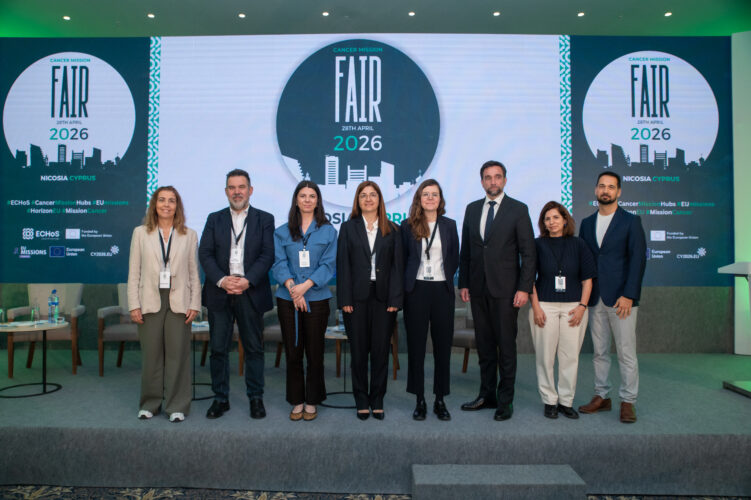
On 28 April 2026, All.Can International Executive Director Madalina Iamandei took to the stage at the Cancer Mission Fair in Nicosia, Cyprus, to deliver a Mission Spark intervention on the future of cancer care across Europe.
The Cancer Mission Fair, convened under the European Cancer Mission (ECHoS) programme, brings together researchers, policymakers, patient advocates and health system leaders to accelerate progress on Europe’s goals for cancer prevention, treatment and care. Mission Sparks are short, focused interventions designed to make a sharp, evidence-based case for a specific systemic shift.
Madalina’s Spark centred on one of the defining challenges of cancer care today: the continued dominance of volume-based reimbursement models in health systems across Europe. Health systems pay for activity. They do not routinely pay for coordination, for shared decision-making, or for the financial and psychosocial support that keeps people with cancer from falling through the gaps in their care. This is not primarily a clinical failure. It is a structural one.
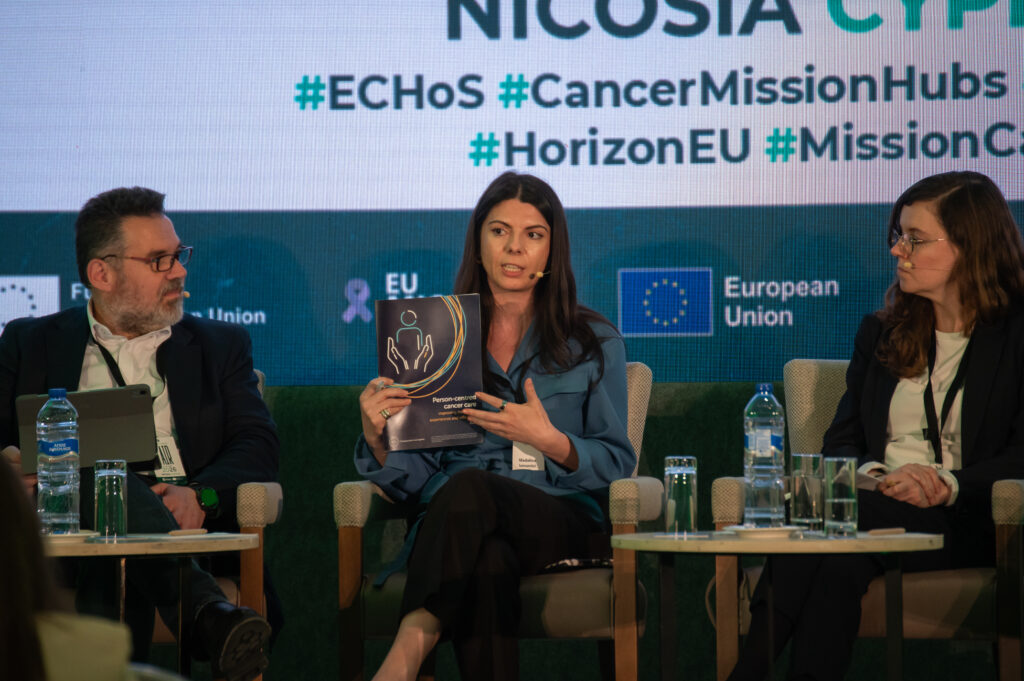
Drawing on All.Can International’s report Implementing Person-Centred Cancer Care to Improve Outcomes, Experiences and Efficiency, Madalina set out the evidence for a different approach. The report, which draws on expert collaboration across eleven countries and an extensive body of research literature, identifies seven concrete steps for reorienting cancer care systems towards outcomes that matter to people living with cancer. Its central argument is that person-centred care is not an aspiration to be pursued when resources allow. It is a system sustainability strategy, backed by evidence from twelve international case studies demonstrating what is already achievable in health systems at every income level.
The Nicosia intervention called for a shift from volume to value: outcome-linked access arrangements that hold systems accountable not for what is provided, but for what is achieved. Coordinated pathways. Meaningful measurement. Financial models that reward quality and continuity rather than throughput.
The evidence is clear. What is needed now is the structural and financial architecture to translate that evidence into consistent, equitable care.
Find out more